
Salesforce Core, Advanced & Max: What the New Editions Mean for Your Renewal
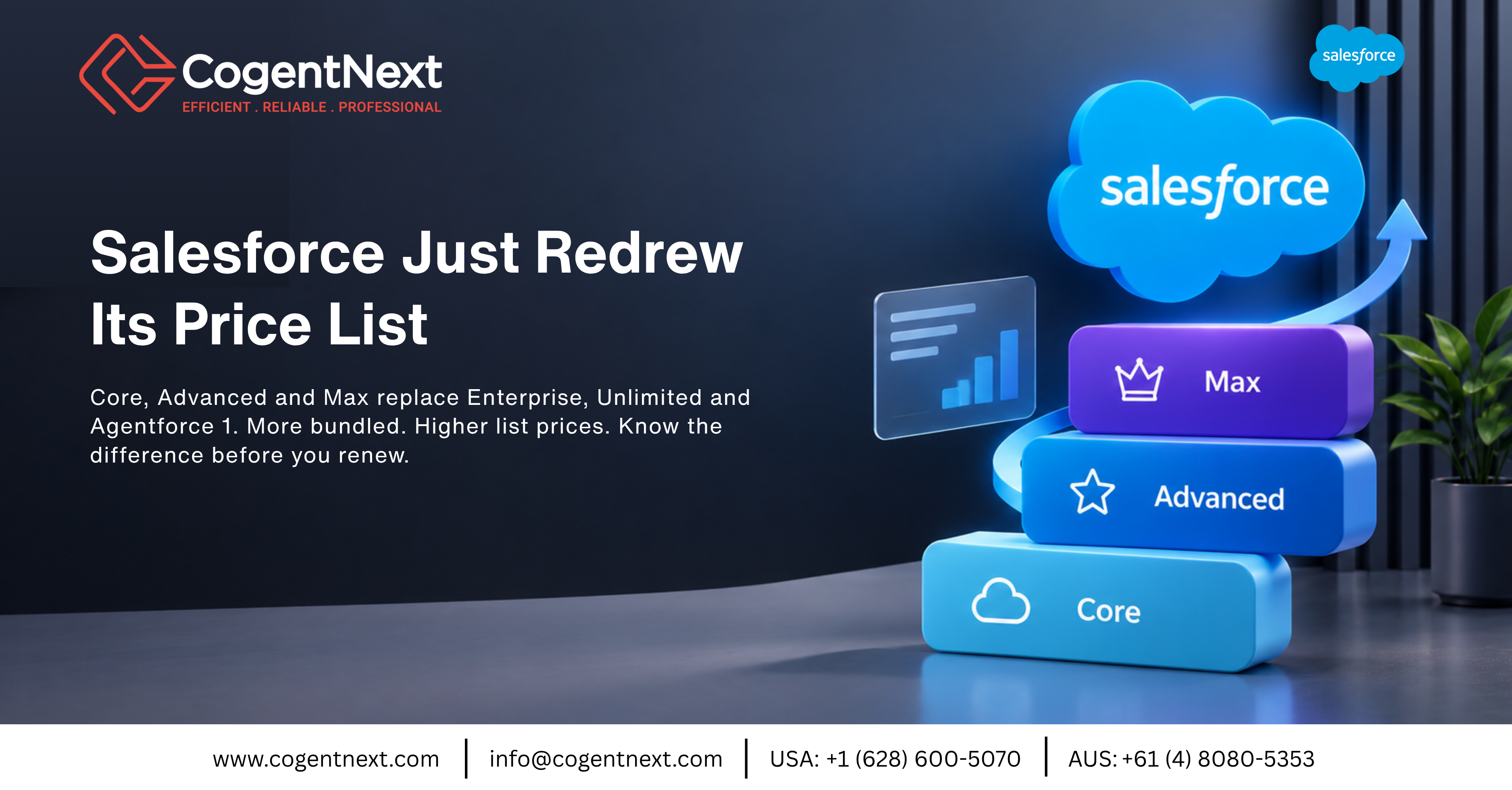
On 3 September 2026, Salesforce quietly redrew its price list. Enterprise, Unlimited and Agentforce1 are out of the spotlight. Core, Advanced and Max are in.
Salesforce calls it simplification. Finance teams may call it a price rise. The truth sits somewhere in between, and it depends on what you already pay for.
If you run Sales Cloud or Service Cloud, now is the time to understand the change, before your renewal lands on your desk.
What Actually Changed
Salesforce collapsed its edition ladder for Agentforce Sales and Agentforce Service into three tiers. Agentforce Industries gets the same treatment, with pricing due later this fall.
The three new tiers map to the old ones like this:
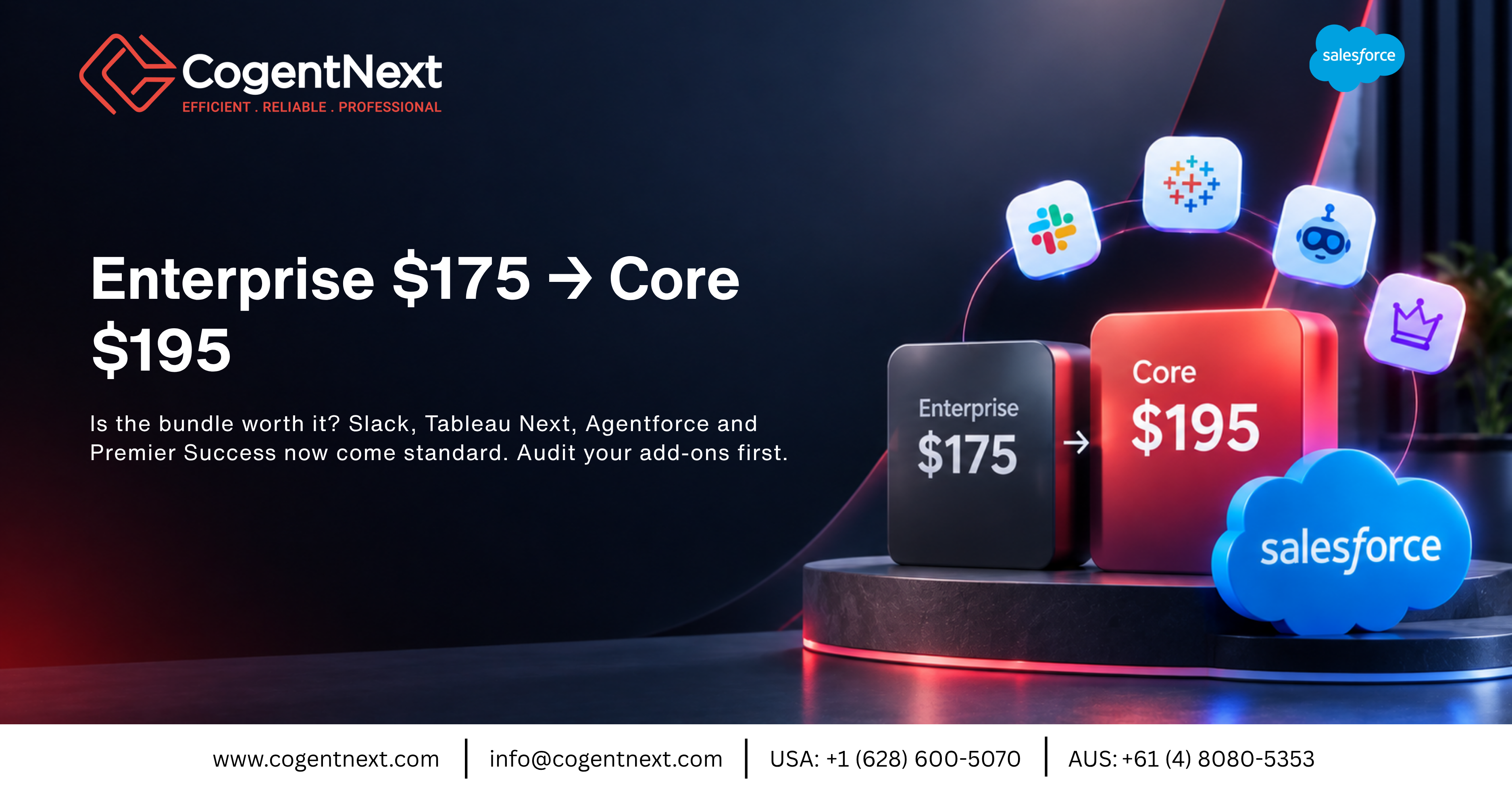
- Core ($195 per user per month) replaces Enterprise ($175).
- Advanced ($395 per user per month) replaces Unlimited ($350).
- Max ($550 per user per month) replaces Agentforce 1 ($550).
Prices are billed annually. Starter Suite and Pro Suite are untouched.
Do the maths and the picture is clear. Core costs about $20 more per seat than Enterprise did. Advanced costs about $45 more than Unlimited. Max costs nothing extra.
What You Get for the Extra Money
This is the real story. Every edition now ships with a common bundle:
- Agentforce, built in rather than sold separately
- Slack with Slackbot
- Embedded analytics through Tableau Next
- Enterprise-grade data security
- The Premier Success Plan
- Bundled Flex Credits, the consumption currency that powers AI agents
Under the old model, many of these were add-ons. Agentforce was a separate purchase on Enterprise and Unlimited. Tableau Next needed its own subscription. Premier Success was extra for Enterprise customers.
Salesforce says Core delivers 70% more value than legacy Enterprise. It says Advanced delivers more than 50% more than Unlimited, and Max nearly 60% more than Agentforce 1. Those are Salesforce’s own numbers. Treat them as a starting point for your own analysis, not the finish line.
The Catch: Value Only Counts If You Use It
Bundling helps only when you would have bought those pieces anyway. Consider two very different companies.
Company A already pays for Slack, Tableau and a premium support plan on top of Enterprise. For them, Core can actually cost less than the stack they assemble today.
Company B uses Sales Cloud for lead-to-deal tracking and nothing else. They never asked for AI agents or analytics. For them, Core is simply a higher price for features that sit idle.
Here is the sum for a 200-seat team. Enterprise at $175 costs $420,000 a year in licences. Moving to Core at $195 adds $48,000 a year. That is a real budget line, and it needs a real business case.
Analysts have also pointed out what Salesforce is really after: faster Agentforce adoption. The bundle nudges customers from experimenting with AI agents towards running them at scale. That is a fair strategy. It only works for you if your data, processes and teams are ready.
Why Salesforce Did This
Three forces are at work. First, Salesforce wants Agentforce in every account, and bundling removes the buying friction. Second, a simpler ladder is easier to sell and easier to raise prices on. Third, AI usage now drives revenue, so credits and consumption sit at the centre of the model.
None of this is sinister. It is how software vendors behave when a new product needs to scale. But it does mean your interests and Salesforce’s are not identical. Plan accordingly.
Flex Credits, Explained Simply
Flex Credits are the meter behind Salesforce’s AI agents. Each time an agent takes an action, such as answering a customer query or updating a record, it uses credits. Every new edition now includes an allowance, and higher tiers include more.
That sounds generous. But credits run out faster than most teams expect once agents move from a pilot to daily work. A busy service team can burn through an allowance quickly.
- Start with one or two high-value use cases, not ten.
- Track credit use from week one, so you can forecast the real bill.
- Ask what happens when the bundled allowance is gone, and at what rate you top up.
Who Should Move, and Who Should Wait
Move early if you were already planning to buy Agentforce, Slack or Tableau. The bundle can replace several line items with one contract, and one negotiation.
Wait and watch if your contract has months left and your team barely touches AI features. Legacy pricing holds until you renew, so there is no rush to change anything today.
Look wider if the new price makes you question the whole fit. It is a fair moment to compare Salesforce with your ERP’s built-in CRM, or with other platforms, on total cost and not just list price.
Questions to Ask Your Salesforce Rep
- Are Enterprise and Unlimited still available to me at renewal? At what price?
- Which of my current add-ons does my new tier replace, and can I drop them?
- How many Flex Credits do I get, and what does a top-up cost?
- Can I move seats in phases, or must everyone switch at once?
- What discount can I expect on a multi-year commitment?
What Has Not Changed (Yet)
Existing contracts stay as they are. Salesforce has said pricing on legacy editions remains unchanged for current customers until they renew or add licences.
The picture on Enterprise and Unlimited is still fuzzy. They have disappeared from parts of the Salesforce website, but some pricing pages still list them. Whether new buyers can still purchase them is not clearly confirmed. Ask your account executive for it in writing.
Industry edition pricing is still to come. If you run Agentforce Industries, expect details later this fall.
A Practical Checklist Before Your Renewal
Audit what you own. List every Salesforce add-on, from Slack to analytics to support plans. Know your true current spend.
Map it to the new tiers. Work out which of your add-ons Core, Advanced or Max now bundle. Count the overlap.
Be honest about AI plans. Will you deploy Agentforce in the next 12 months? If yes, the bundle earns its keep. If not, push back.
Model your Flex Credit needs. Credits are consumed as agents work. Estimate usage before you assume the bundled allowance is enough.
Negotiate early. Start talks well ahead of your renewal date. Ask about phased seat moves and multi-year terms.
Get it in writing. Confirm which editions you can renew on, and at what price.
The Bigger Picture
This move says something about where enterprise software is heading. AI is no longer a side project you add on. It is becoming the base layer, and it is priced that way.
The same shift is reaching ERP and CRM platforms across the board. Buyers who treat these changes as a chance to review their whole stack, not just one line item, will come out ahead.
That is where a partner helps. Reading a new price list is easy. Knowing which tier fits your sales process, your data quality and your growth plan is harder.
How CogentNext Can Help ?
CogentNext Technologies helps businesses across India, Australia and the USA get more from Salesforce and their wider ERP and CRM landscape. Our team can:
- Review your current Salesforce licences and add-ons
- Compare Core, Advanced and Max against your actual usage
- Plan and roll out Agentforce with proper governance and data readiness
- Integrate Salesforce with your ERP so sales and finance work from one version of the truth
Renewal season rewards the prepared. Talk to CogentNext before your next Salesforce conversation, and walk in with a plan.
Get in touch with us:
Email: info@cogentnext.com
USA: +1 (628) 600-5070
AUS: +61 (4) 8080-5353