
40% by 2026: Gartner’s AI Agent Forecast and What It Means for Your ERP Readiness.
Gartner projects that by the end of 2026, 40% of enterprise applications will include:
Task-specific AI agents, up from under 5% in 2025. That’s not a gradual trend line, it’s a 35-point jump in a single year, and it applies directly to the ERP and CRM systems most businesses already run every day.
For finance and IT leaders, this number is worth pausing on. It signals a shift from AI as an experiment a handful of companies were trying, to AI agents becoming a standard, expected part of the everyday business software nearly half of enterprises will be running within months. This piece breaks down what that actually means, and what it takes to be ready for it.
What “Task-Specific AI Agent” Actually Means
It’s worth being precise here, because the term gets used loosely. A task-specific AI agent isn’t a chatbot that answers a question when you ask it something. It’s software that receives a goal, plans the steps, and carries out a multi-step task on its own inside your business systems, often without a human triggering each step. A few concrete examples already live in ERP and CRM platforms today:
- An agent inside your ERP that matches incoming vendor invoices against purchase orders and posts the approved ones directly to the general ledger.
- An agent inside your CRM that notices a proposal has sat unopened for several days and automatically queues a follow-up for approval.
- An agent inside a support system that triages incoming tickets, resolves the routine ones, and only escalates what genuinely needs a person.
The shared thread across all three: the agent isn’t suggesting an action for someone to approve, it’s completing the work end-to-end, and only surfacing what looks unusual or genuinely needs a human decision.
Putting the Number in Context
A 35-point jump in twelve months is unusual for enterprise software, a category that typically moves in multi-year cycles because of how long implementation, testing, and change management usually take. A few things explain why this shift is moving faster than the norm:
- Vendors are embedding agent capability directly into existing platforms rather than selling it as a separate product, so businesses gain access simply by staying on a current release, not by running a new implementation project.
- The underlying AI models powering these agents have become reliable enough for narrow, well-defined tasks, invoice matching, ticket triage, scheduling, without needing custom development for each use case.
- Early results from finance and customer service deployments are measurable enough (reduced cost-per-invoice, faster ticket resolution) that adoption is being driven by ROI data, not just vendor marketing.
That combination, low friction to adopt plus visible early returns, is largely why this is compressing into a one-year shift rather than the usual multi-year enterprise software cycle.
This isn’t a marketing push from one vendor. It’s a shift happening in parallel across the platforms most businesses already run on:
- Oracle Fusion Cloud HCM now runs teams of specialized AI agents to manage scheduling, absences, timecards, and payroll.
- Microsoft Copilot is embedded in Business Central and Finance & Operations, increasingly handling invoice coding, sales-order entry, and master-data search.
- Salesforce and Oracle NetSuite offer similar agentic patterns across CRM and financial workflows.
- SAP has moved its Joule copilot from a single feature to a capability spanning S/4HANA, SuccessFactors, and its broader technology platform.
In other words, this isn’t a separate product you’d need to go shopping for. If your business runs any of these platforms and keeps them reasonably current, AI agent capability is already arriving inside the tools you use, whether or not you’ve turned it on.
What This Looks Like Platform by Platform
It helps to see how differently, and how quickly, this is showing up depending on which system a business already runs:
- Microsoft Dynamics 365: Copilot is already embedded across Business Central and Finance & Operations, increasingly handling invoice coding, sales-order entry, and master-data search without a separate rollout project.
- SAP: Joule has expanded from a single assistant feature into a capability spanning S/4HANA, SuccessFactors, and the broader Business Technology Platform, meaning agent capability now touches finance, HR, and operations together.
- Oracle: Fusion Cloud HCM’s Workforce Operations Command Center runs teams of specialized agents handling scheduling, absences, timecards, and payroll as a coordinated group rather than isolated features.
- Salesforce: Agentforce and Einstein extend similar agentic patterns into CRM workflows, sales follow-up, and case resolution, alongside NetSuite’s parallel financial automation.
The pattern across all four: none of this requires switching platforms. It requires knowing what’s already available inside the one you run, and deciding deliberately what to turn on and how to govern it.
Where the Real Value Shows Up First
The most immediate, practical value isn’t in replacing entire job functions, it’s in exception handling. Instead of a finance team manually checking every overdue invoice or scanning for unusual transactions line by line, an AI agent does the first pass across the full batch and surfaces only what actually needs attention.
That doesn’t eliminate the need for an accountant, a controller, or a sales operations lead. It changes where their time goes, away from scanning everything for problems, and toward actually resolving the handful of things that need judgment. For high-volume, repetitive processes, invoice matching, order entry, ticket triage, that shift alone tends to be where the earliest, most measurable returns show up.
What “Readiness” Actually Requires
The businesses that get real value from this shift, rather than a messy rollout, generally have a few things in place before they scale up AI agent use:
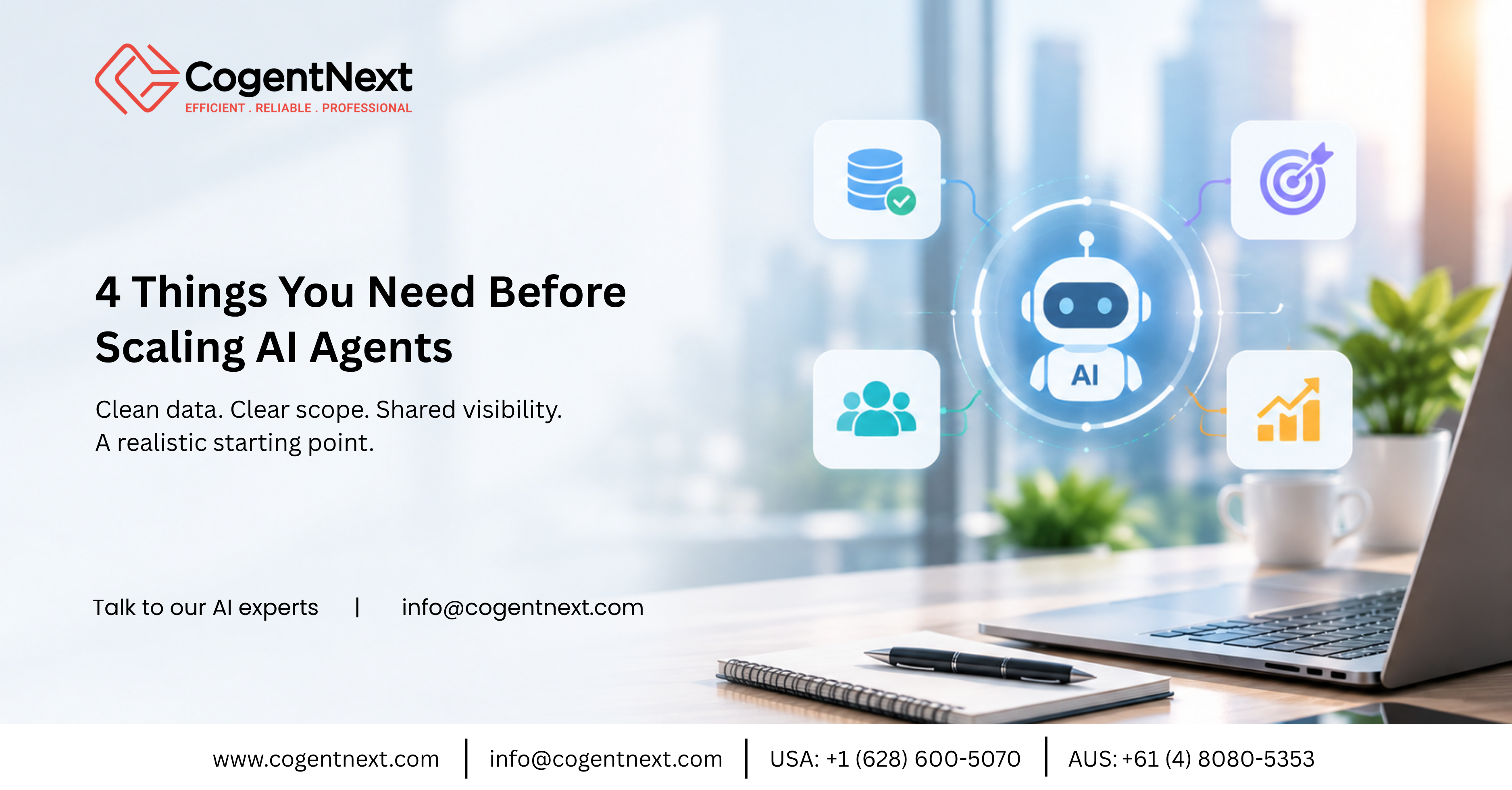
- Clean, reliable data: an AI agent recommending or acting on incomplete or inconsistent supplier, customer, or account records will be unreliable no matter how well it’s configured.
- A clear scope of authority: which specific actions is each agent allowed to take, and where does that authority end? This should be defined before go-live, not discovered afterward.
- Visibility across departments: a shared view of every AI agent running across the business, not separate, disconnected rollouts by finance, sales, and operations.
- A realistic starting point: beginning with one high-volume, lower-risk process, like invoice matching, rather than a high-stakes workflow, so the guardrails get tested before the stakes increase.
None of this requires a complete platform overhaul. Most of it is a readiness and governance exercise layered onto systems you likely already run.
Two Common Misconceptions Worth Clearing Up
As this number circulates, two misreadings tend to come up in conversations with clients:
- “This means AI will run our ERP without oversight.” Not accurate. Task-specific means narrow and bounded, an agent handling invoice matching isn’t the same as an agent making unsupervised financial decisions. Scope and human review points remain essential design choices, not optional extras.
- “We’re too small for this to matter yet.” Also not accurate. Because these agents are increasingly built into the platforms themselves rather than sold as enterprise-only add-ons, mid-market businesses running Business Central, SAP Business One, or NetSuite are getting access to the same underlying capability as much larger organizations, often as part of a standard update rather than a separate purchase.
Getting this distinction right matters, because it shapes how a business should plan: not “should we hand over control,” but “which narrow, well-defined tasks are worth automating first, and what guardrails does each one need.”
What Happens If You Wait
The practical risk of waiting isn’t that AI agents disappear as an option, it’s competitive timing. If close to half of enterprise applications carry this capability by the end of 2026, a meaningful share of your competitors, and likely your own vendors’ default configurations, will already be operating this way. Businesses that treat this as a 2027 problem may find themselves catching up on both the technology and the internal readiness work at the same time, which is a harder position than starting the readiness work now, before the pressure to move fast arrives.
What This Could Look Like in Practice
Picture a mid-sized distribution business running Microsoft Dynamics 365 Finance & Operations and a separate CRM for sales. Today, an accounts payable clerk manually reviews every incoming vendor invoice, checking it against the purchase order before approving payment, a process that eats several hours a week even when nothing is wrong.
With a task-specific AI agent handling first-pass matching, the same clerk instead reviews a short daily list of exceptions, an invoice that doesn’t match the PO amount, a new vendor without prior payment history, a duplicate submission. The routine 90% of invoices post automatically; the clerk’s time goes entirely toward the 10% that actually need judgment.
On the CRM side, a similar agent might flag a proposal that’s gone quiet for a week and draft a follow-up for the sales rep to approve with one click, rather than relying on the rep to remember to check. Neither example eliminates a role. Both change what that role spends its day doing.
A Simple First Step
You don’t need a full AI strategy document before taking a first step. A practical starting point is a short internal audit: which AI agent features are already available inside your current ERP and CRM platforms but sitting switched off, which teams have already turned something on without a formal review, and which single high-volume process (invoice matching, ticket triage, lead follow-up) would benefit most from a first, well-scoped pilot. That inventory alone usually reveals more readiness, or more gaps, than most businesses expect.
The Bottom Line
The jump from under 5% to a projected 40% in a single year is a signal, not a sales pitch: AI agents are moving from experimental to standard inside the ERP and CRM systems businesses already depend on. The organizations that benefit most won’t be the ones that adopted fastest, they’ll be the ones that paired adoption with clean data, clear scope, and shared visibility from the start.
At CogentNext, we help businesses across India, Australia, and the US assess where their ERP and CRM systems stand today, and build a practical, governance-aware roadmap for adopting AI agents inside Dynamics 365, SAP, Oracle, or Salesforce. If you’re wondering whether your systems are ready for what 2026 is bringing, let’s talk.
Get in touch with us:
Email: info@cogentnext.com
USA: +1 (628) 600-5070
AUS: +61 (4) 8080-5353